
.svg)


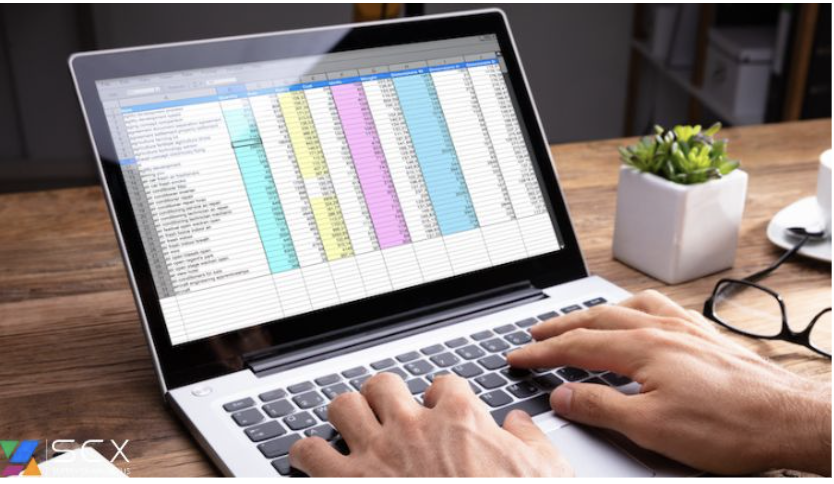
Inventory reconciliation looks under control when it lives in a spreadsheet. Rows are filled, and numbers feel safe, but that sense of control is often fake.
For wholesale supply chain teams, Excel inventory files turn into a daily source of frustration. One missed update, one copied formula, or one outdated version can quietly throw off your entire stock picture.
By the time discrepancies surface, the damage is already done. With delayed orders, unexpected write-offs, and teams arguing over which number is “right.”
This is the real problem with manual inventory reconciliation spreadsheets: they don’t fail loudly. They fail slowly.
If your inventory accuracy depends on human memory and manual fixes, accuracy will always slip. Read on to map your inventory chaos and see where control is actually being lost.
What is Inventory Reconciliation?
Inventory reconciliation is the process of matching what your system says you have with what physically exists in your warehouses. On paper, it sounds simple. In practice, it becomes complex the moment your business grows beyond a single location or a small SKU list.
For wholesale distributors, reconciliation isn’t just about counting stock. It connects purchasing, sales, accounting, and fulfillment. Every inbound shipment, outbound order, return, and adjustment changes inventory levels. When these movements are tracked in Excel inventory files, accuracy depends on constant manual updates.
That’s where problems start. Spreadsheets don’t reflect real-time activity. They show snapshots. By the time numbers are reviewed, they’re already outdated. Inventory reconciliation should reveal the truth across your supply chain, not create debates about which spreadsheet version is correct.
The Hidden Cost of Using an Inventory Reconciliation Spreadsheet
An inventory reconciliation spreadsheet feels flexible, but that flexibility comes at a cost. Every manual entry introduces risk. A skipped row, a broken formula, or a delayed update can quietly distort your stock levels.
Excel inventory tracking also creates version chaos. Teams save copies, make edits, and share files back and forth. Soon, finance, operations, and warehouse teams will all be working from different numbers. Reconciliation turns into damage control instead of insight.
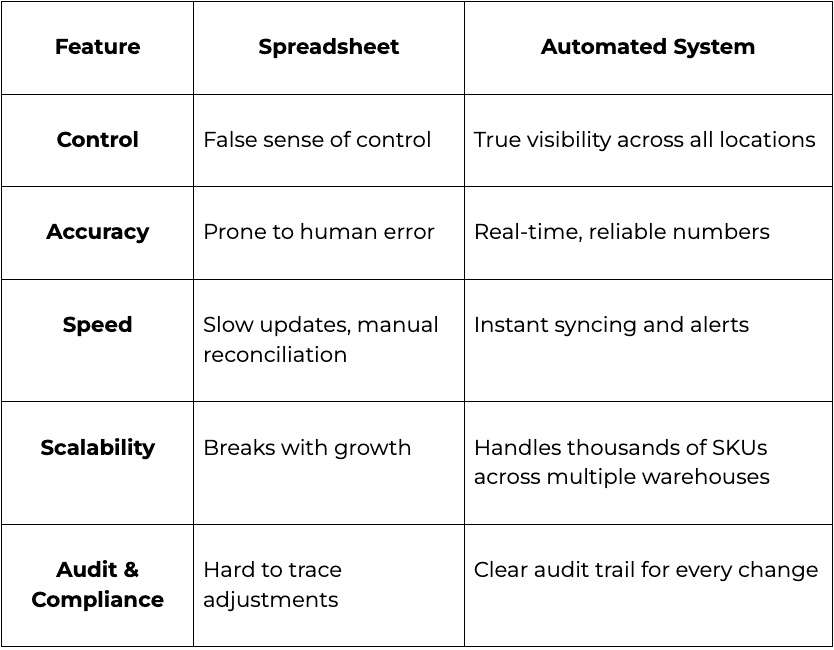
The biggest issue is false confidence. Spreadsheets look clean even when they’re wrong. Errors compound over time, masking shrinkage, mis-picks, and system gaps. Instead of exposing problems early, manual systems hide them—until inventory issues start affecting revenue, customer trust, and decision-making.
Common Inventory Reconciliation Problems Spreadsheets Can’t Solve
Inventory issues rarely come from one big mistake. They build slowly through small gaps that spreadsheets cannot catch in time. One of the most common problems is mismatched counts. Your system shows available stock, but the warehouse shelf tells a different story.
Spreadsheets also struggle with shrinkage and unexplained variances. Theft, damage, mis-picks, and supplier errors often go unnoticed because Excel inventory files only change when someone updates them. By then, the root cause is hard to trace.
Another major issue is disconnected data. Sales, purchasing, and accounting often operate in separate files or systems. When reconciliation relies on manual exports and copy-paste work, accuracy breaks down. Instead of preventing errors, spreadsheets force teams to react after losses have already occurred.
Why Manual Inventory Systems Destroy Accuracy
Manual systems fail faster as your business grows. More SKUs, more locations, and higher order volume mean more data moving at speed. Excel inventory tools were never built for that level of complexity.
Each manual update adds friction. Each delay multiplies the error. Over time, small inaccuracies stack on top of each other. What starts as a minor mismatch turns into major write-offs, stockouts, or excess inventory.
At scale, accuracy cannot depend on people remembering to update spreadsheets. Wholesale supply chains need systems that sync automatically. Without that, inventory reconciliation becomes guesswork, making planning, forecasting, and customer commitments harder to trust.
What Automated Inventory Reconciliation Changes
Automation transforms inventory reconciliation from guesswork into reliable truth. Instead of waiting for physical counts and manually updating Excel inventory files, an automated system continuously syncs stock levels across warehouses, sales channels, and accounting records.
With real-time updates, discrepancies are flagged immediately. Adjustments are logged automatically, and your teams no longer waste hours reconciling numbers manually. Automated reconciliation also creates a single source of truth, ensuring every department, finance, operations, and warehouse works from the same data.
By replacing spreadsheets with automated solutions, you move from reactive problem-solving to proactive control. Inventory issues are caught before they impact orders, shipments, or revenue, giving your business the confidence that every number reflects reality.
Ready to stop fighting spreadsheets? Map your inventory chaos today and see your stock truth in real time.
Spreadsheet vs Automated Inventory Reconciliation:
How Supply Chain Nexus Can Map Inventory Chaos?
Supply Chain Nexus automates inventory reconciliation end-to-end. Our platform:
- Syncs inventory across warehouses, sales channels, and accounting systems
- Detects discrepancies in real time
- Creates a single source of truth for every SKU
- Generates audit-ready reconciliation reports instantly
With Supply Chain Nexus, spreadsheets are no longer your control system. You see the truth behind your numbers and gain confidence that your inventory is accurate, scalable, and reliable.
Take the first step to accurate, automated inventory with us and turn frustration into clarity.
Conclusion:
Manual inventory reconciliation spreadsheets create a false sense of control. They hide errors, delay insight, and multiply frustration. For wholesale supply chains, relying on Excel is no longer sustainable.
Automation replaces guesswork with accuracy. It connects warehouses, sales, and accounting in a single source of truth. With Supply Chain Nexus, reconciliation becomes faster, simpler, and more reliable, letting your teams make decisions with confidence.
Don’t let spreadsheets control your business. Map your inventory chaos today with Supply Chain Nexus and take charge of your inventory truth.